PBD India › What Travelled › 2,300 km
2,300kmKozhikode to Muscat, straight line, rounded
Money Moving Home, and What It Built
The physical record of diaspora remittances in the sending villages of Kerala, Gujarat, and Andhra Pradesh: houses, wells, schools and libraries.
What the Money Became
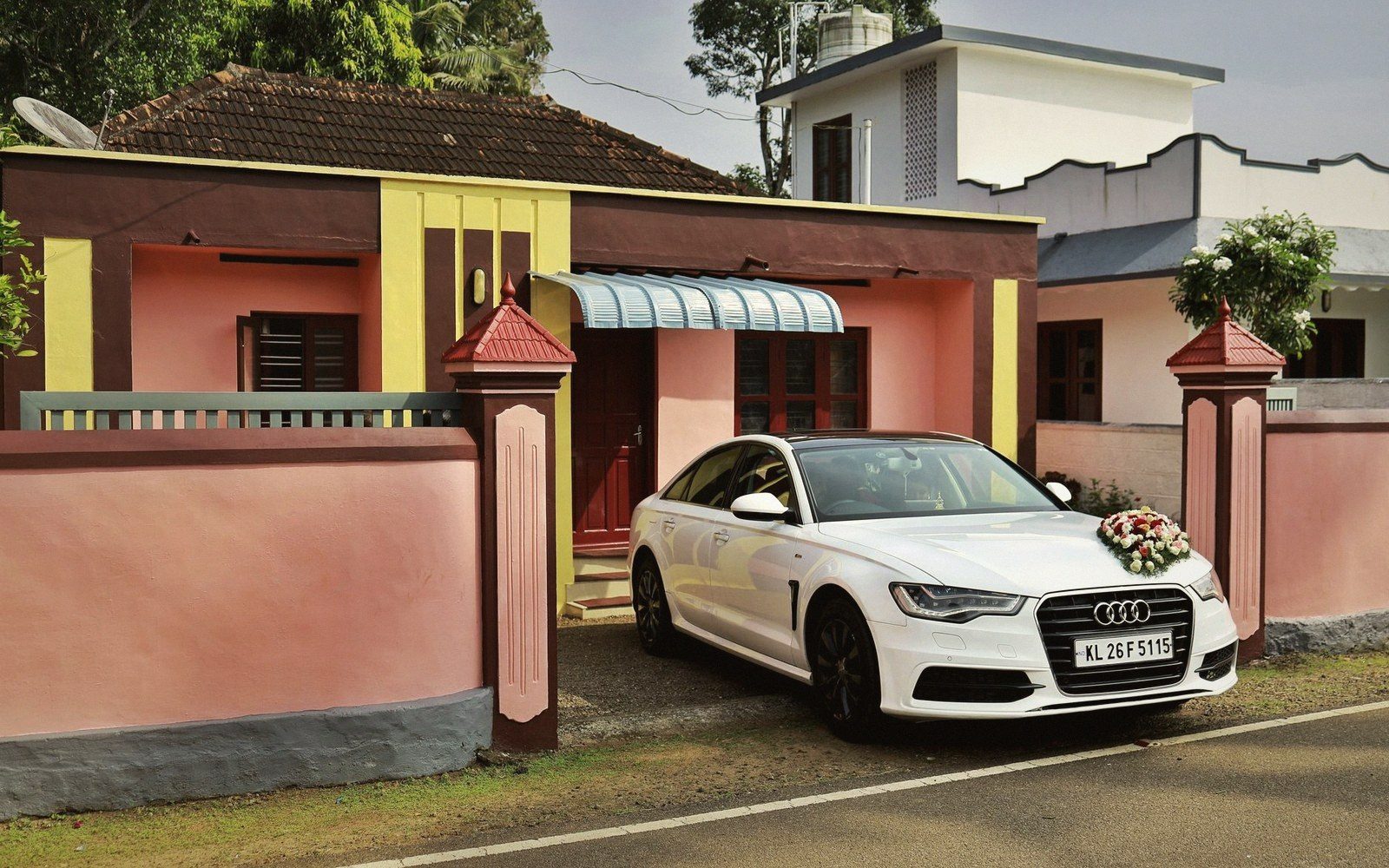
Before development economists gave it a name, remittance was simply what a man sent home when he could. In coastal Kerala's Malabar districts, families received money orders from the Gulf through the 1970s and 1980s that were converted almost immediately into cement and tile — the flat-roofed, brightly painted "Gulf houses" that still crowd the landscape of Malappuram and Kozhikode are a legible archive of what labour export produced at home. These were not vanity projects. A new house with a dry ground floor and tiled roof replaced structures that flooded seasonally; the school building donated in the family name down the lane represented surplus above that.
In Gujarat, the flow predates the Gulf. Patidars from Charotar — the fertile tract around Anand and Kheda — were moving to East Africa and then to Britain and North America from the early twentieth century. Money returned in those channels built drinking-water wells, paved approach roads to villages, and funded primary schools in districts where the colonial state had not bothered. The dug well outside a small village near Nadiad with a donor plaque in Gujarati naming a merchant who died in Nairobi in 1961 is not a curiosity; it is normal evidence of a hundred-year-old circuit.
In coastal Andhra Pradesh, especially in West Godavari and Krishna districts, communities with long histories of movement to Burma and, later, to the United States built hospitals and libraries whose founding plaques name Telugu associations registered in California and New Jersey. The institutions outlasted the donor generation. A library opened in the 1980s with books selected by an NRI committee in Houston still operates under the same trust deed.
The pattern across all three cases is consistent: initial remittances stabilised household consumption; sustained remittances funded built infrastructure; and a third phase produced endowed institutions — temples, schools, medical clinics — that served whole communities rather than the sending family alone. What distinguishes the Indian case is not the generosity but the specificity. The money moved along caste and village networks precise enough that it usually landed within a few kilometres of where the migrant had started.
The infrastructure survives in places where the original migrants are three generations gone. That is the physical measure of how far the flow reached.
Chronology of flows
From the record
- Early 20th centuryPatidar movement to East Africa; wells and road improvements in Charotar, Gujarat
- Mid-20th centuryGulf migration begins from Kerala's Malabar coast; "Gulf houses" and school buildings appear in Malappuram, Kozhikode
- 1960s–70sNairobi-origin donations recorded on infrastructure in villages near Nadiad, Gujarat
- 1980s onwardTelugu NRI associations in California and New Jersey fund libraries and hospitals in West Godavari and Krishna districts, Andhra Pradesh
Three phases, one pattern
From the record
| Phase 1 | Remittances stabilise household consumption (food, medical, debt) |
|---|---|
| Phase 2 | Surplus funds built infrastructure for the sending family (house, well, approach road) |
| Phase 3 | Endowed institutions — temples, schools, clinics — serve the broader community and outlast the donor generation |
This entry is history and context. It is not advice about immigration, visas, citizenship, residence, tax or money, and it must not be used that way. Where accounts differ, the entry says so.
Near this on the scale
What Travelled