PBD India › The Gulf › 1,200 km
1,200kmKarachi to Dubai, straight line, rounded
Before Oil: The Dhow, the Pearl Bank, and the Sindhi Trader
Indian merchants and sailors were embedded in Gulf commerce long before the labour corridors opened — the oil-era story erases a commercial geography centuries older.
A Trade That Did Not Begin With Britain
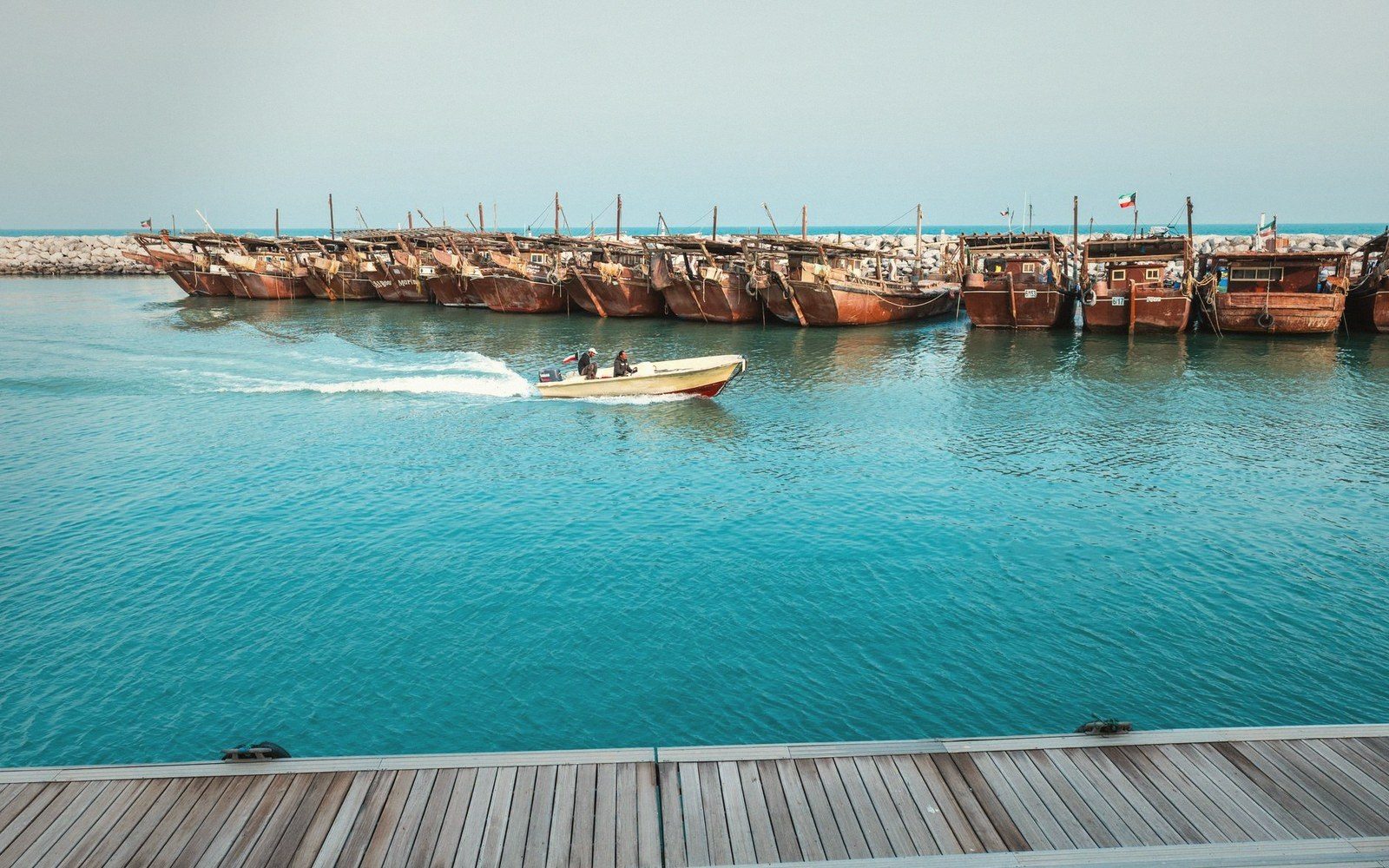
The monsoon was the engine. Every year, the northeast wind carried dhows — the lateen-rigged wooden vessels of the western Indian Ocean — northward from the Malabar and Konkan coasts toward Muscat, Bahrain, Kuwait, and Basra, and the southwest monsoon brought them back. This seasonal rhythm had been running continuously since at least the tenth century, and probably far earlier. When the British East India Company began formalising its presence in the Gulf in the early nineteenth century, it found Indian commercial networks already well-rooted: Baniya and Bhatia merchants from Gujarat holding credit arrangements with Arab and Persian traders, Khojas operating warehouses in Muscat, and sailors from the Kutch coast who knew these waters as their working world, not as an exotic posting.
The dhow trade was not informal improvisation. It was a layered credit economy. Indian financiers — many based in Mandvi on the Kutch coast — extended advances to Arab pearl merchants and dhow captains, holding the catch or the cargo as collateral. The Arabic term nakhoda (ship's captain) was often a man whose vessel was financed by Indian capital, whose crew included workers from the Makran coast, and whose profits, on settling in Bombay or Mandvi, passed through an Indian broker's ledger. The pearl banks off Bahrain were perhaps the most concentrated example: Indian financiers from Kutch and Sindh underwrote the diving season, advanced funds against the harvest, and effectively set the price at which Gulf pearls entered the Bombay market and from there the world.
The Sindhi Position
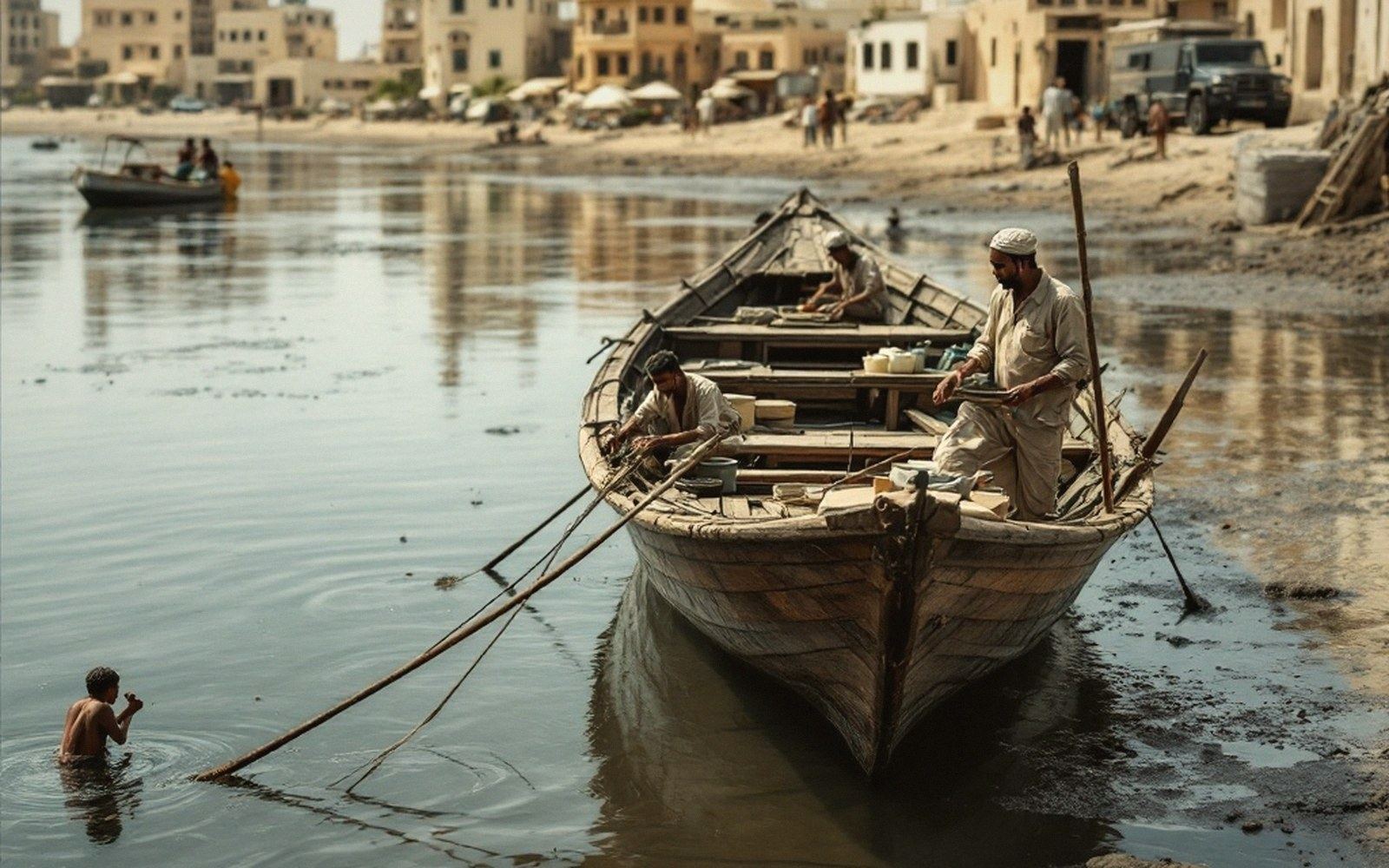
The Sindhi trading families who established themselves across Gulf ports before the oil era operated on a principle that geographers of trade have since called relay commerce: not a single headquarters but a network of resident agents, kinsmen, or junior partners placed at each node. By the late nineteenth and early twentieth centuries, Sindhi merchant houses had positions in Muscat, Bahrain, Kuwait, Aden, and Zanzibar simultaneously. They traded cotton textiles, spices, and metalware outward, and pearls, dates, and dried fish inward. Several families had been established in Muscat for generations before the British government signed its first formal treaty with the Sultan of Oman.
Several families had been established in Muscat for generations before the British government signed its first formal treaty with the Sultan of Oman.
This dispersal was deliberate strategy, not diaspora in the conventional sense. When the Partition of 1947 severed Sindh from India, many of these families were already positioned to reconstitute themselves around existing nodes — Bombay, Hong Kong, London — without catastrophic loss of network, because the network had never been centralised in the first place. The Gulf branches simply continued.
Chronology
From the record
- 10th century (and earlier)Indian Ocean dhow trade routes connecting Kutch, Malabar, and Gulf ports operational
- Early 19th centuryBritish East India Company formalises Gulf presence; finds Gujarati and Sindhi merchants already established
- Late 19th–early 20th centurySindhi merchant houses hold simultaneous positions in Muscat, Bahrain, Kuwait, Aden, Zanzibar
- 1930sJapanese cultured pearl trade collapses Gulf pearl-diving economy; Indian financier capital redirected
- 1947Partition of India; Sindhi merchant networks reconstitute around existing offshore nodes
- 1970s onwardOil-era labour migration begins; largely obscures the older commercial geography
What the Oil Narrative Displaces
The standard account of Indians in the Gulf begins in the 1970s, with construction sites, labour contracts, and the oil-funded remittances traced in Kerala's second economy. That story is real and important. But it rests on a foundation the oil narrative rarely acknowledges: a commercial infrastructure already centuries deep, built from monsoon knowledge, extended credit, and the Sindhi and Gujarati merchant's willingness to place family members in ports that were remote and sometimes dangerous long before the drilling began.
The pearl economy collapsed in the 1930s, when Japanese cultured pearls entered the market and removed the premium that had sustained the diving banks. Families that had underwritten the diving season for generations had to redirect capital. Some moved into the textile trade; others into currency exchange; a few into the earliest import businesses that the oil era would later call modern. By the time the first oil concessions were signed, Indian commercial presence in the Gulf was not new. It was restructuring.
Key terms
From the record
| Dhow | lateen-rigged wooden sailing vessel of the western Indian Ocean, the primary vehicle of monsoon-cycle trade |
|---|---|
| Nakhoda | Arabic: ship's captain; often the operational head of a vessel financed by Indian capital |
| Baniya, Bhatia, Khoja | merchant communities from Gujarat prominent in Gulf commercial networks before the colonial period |
| Relay commerce | trading strategy of placing resident agents at multiple ports rather than centralising from a single base |
This entry is history and context. It is not advice about immigration, visas, citizenship, residence, tax or money, and it must not be used that way. Where accounts differ, the entry says so.
Near this on the scale
The Gulf